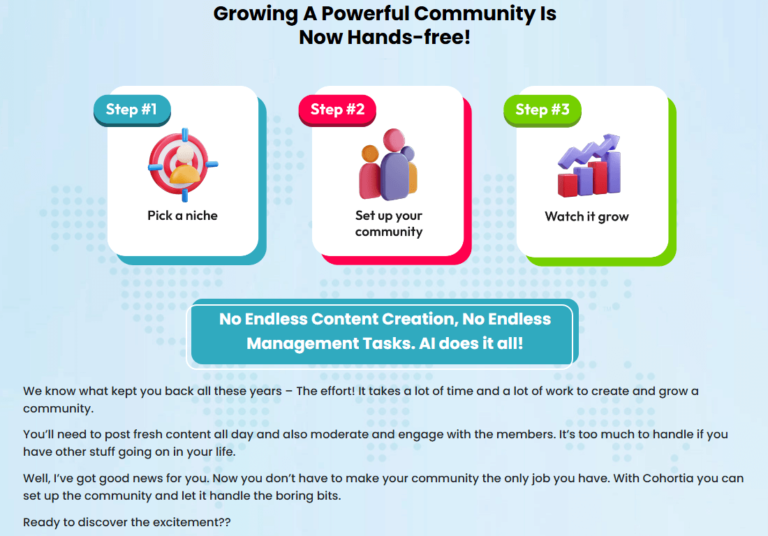
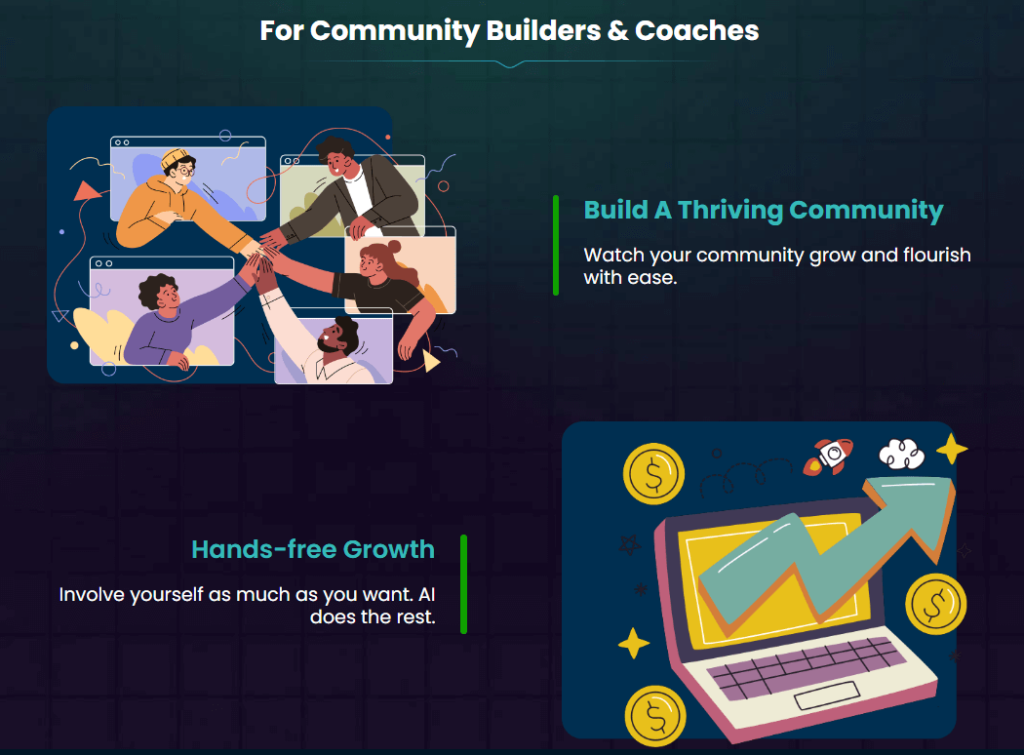
To be clear, the promise of Cohortia is not that it magically creates a profitable community overnight, and that’s an important mindset going in. Instead, the value proposition is that Cohortia aims to reduce the ongoing operational effort—especially the “daily posting and engagement” burden—so you can focus more on strategy, offers, and member outcomes rather than constant activity maintenance.
To start with, the initial concept and setup flow felt oriented toward speed, because Cohortia is built as a hosted platform and emphasizes getting a community live without wrestling with hosting and complicated installs. As a result, it’s easier to think in terms of “launch first, optimize after,” which matters because communities tend to improve once real members join and you can see what actually drives participation. Moreover, the inclusion of built-in community components—like events, member chats, and profiles—makes it feel like more than a forum replacement, since those elements can meaningfully change how connected members feel.
After the basic setup, the most defining part of the Cohortia experience is obviously the virtual AI members, and it’s also the part that deserves the most thoughtful handling. On one hand, it can be genuinely useful to have activity and conversation starters in place, because a quiet community can discourage participation even if members are interested. On the other hand, there is a balancing act involved, because community trust is fragile and people can react negatively if engagement feels artificial. Therefore, the best way to use this feature—based on how the product positions it—seems to be as an engagement support layer rather than as the “main event.” In other words, Cohortia works best when AI activity helps members feel seen and sparks discussion, while the real value still comes from the community’s human expertise and leadership.
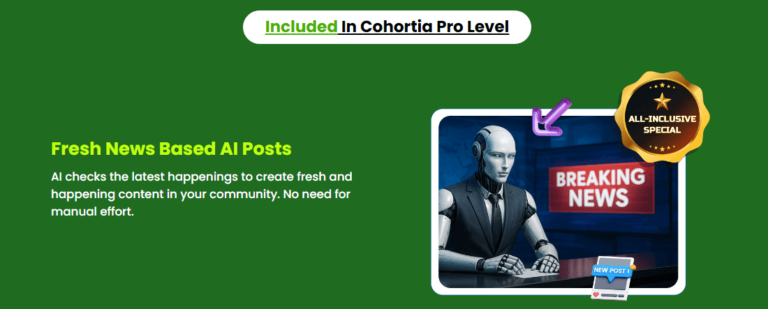
Next, the AI auto-posting and AI commenting components are where the “hands-free” claim becomes more tangible, because once you define the community’s direction, you can keep a steady flow of prompts and conversation topics without constantly inventing new angles. That said, it’s still wise to treat AI content like a draft assistant rather than a complete replacement for leadership, because strong communities usually have a clear identity, unique insights, and intentional culture. Consequently, a practical approach is to let Cohortia handle baseline engagement while you step in to shape the best threads, highlight important posts, and guide members toward your key outcomes—whether that is learning, support, or transformation.
In addition, the events and chat features can become retention drivers if used consistently, because scheduled touchpoints and real-time conversation often create deeper bonds than posts alone. For example, running recurring events—whether free or paid—can turn a community into a routine rather than a “nice-to-have.” Similarly, member chat can increase the sense of closeness, although it also requires an eye on moderation and community guidelines, which is where Cohortia’s moderation features become more relevant.
As monetization enters the picture, Cohortia is built around having multiple revenue paths rather than forcing you into a single model. Because you can monetize memberships, tiers, posts, and events, it becomes easier to match monetization to your niche. For instance, a coaching-style community could convert free members into paid tiers, while a niche professional group might succeed with paid membership access from the start. Meanwhile, the support for multiple gateways like PayPal and Stripe can reduce friction for global audiences, which can matter if you serve members across regions.
Finally, the idea that your community can behave like an app through Progressive Web App (PWA) support is a practical advantage, because mobile convenience can boost repeat visits. Since communities often succeed when they become part of a member’s daily pattern, anything that reduces access friction—like an installable app experience—can support retention over time.
Overall, this Cohortia Review takeaway from “using it” is that Cohortia is most valuable when you treat it as an operations and engagement assistant. In that case, you still lead the community with real direction, but you rely on Cohortia to reduce the constant pressure of “posting all day, every day” and keeping the room active during slow periods.