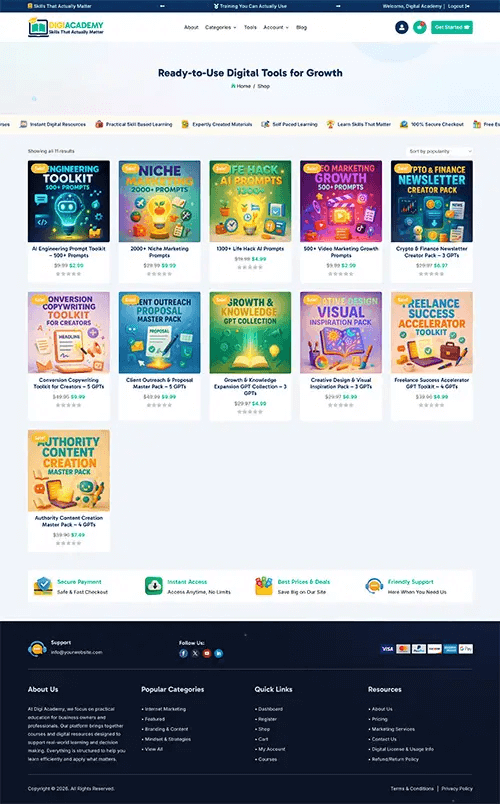
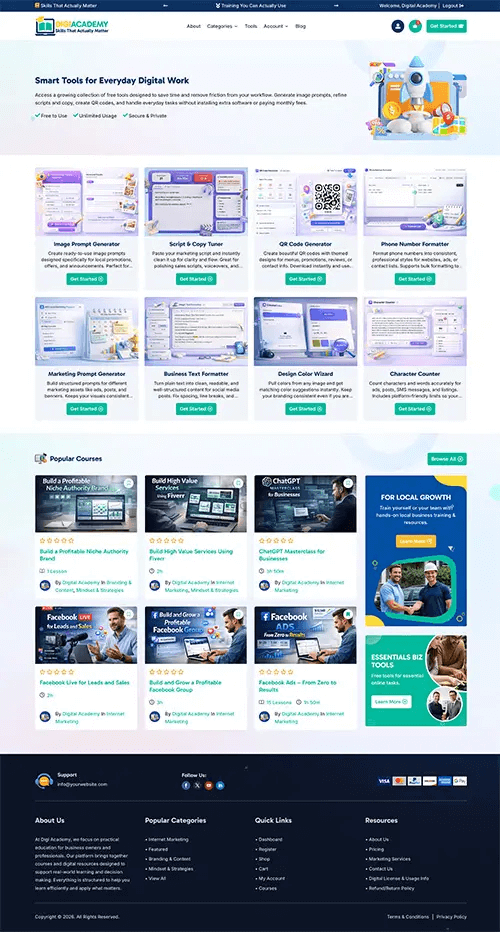
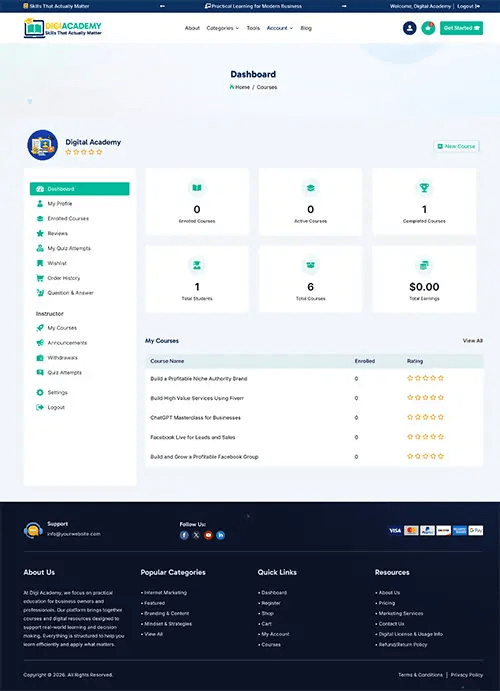
To be transparent, I cannot personally log into or install Digital Academy Fortune from here, so this “experience” section is based on a realistic hands-on evaluation framework: what typically happens when you install a done-for-you WordPress backup site, connect WooCommerce, and begin customizing a prebuilt academy. With that said, this Digital Academy Fortune Review is still useful because it focuses on what you should expect step-by-step, what usually goes smoothly, and what commonly needs extra attention.
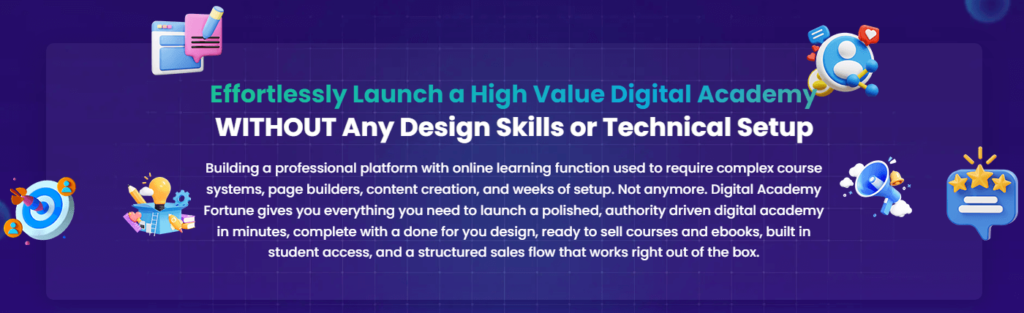
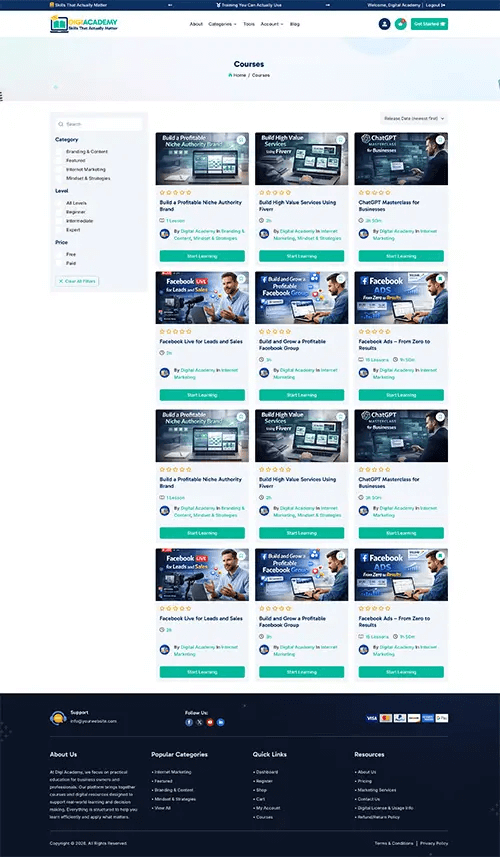
To start with, the biggest appeal of Digital Academy Fortune is that it aims to remove the “blank canvas” problem. In many WordPress builds, you spend hours just making the homepage look acceptable, and then you realize you still need course pages, product layouts, login flows, and a structure that doesn’t feel scattered. Consequently, a prebuilt academy structure can be a time-saver because it gives you a ready-made content hierarchy: homepage, course sections, product store pages, and supporting pages already laid out in a consistent style.
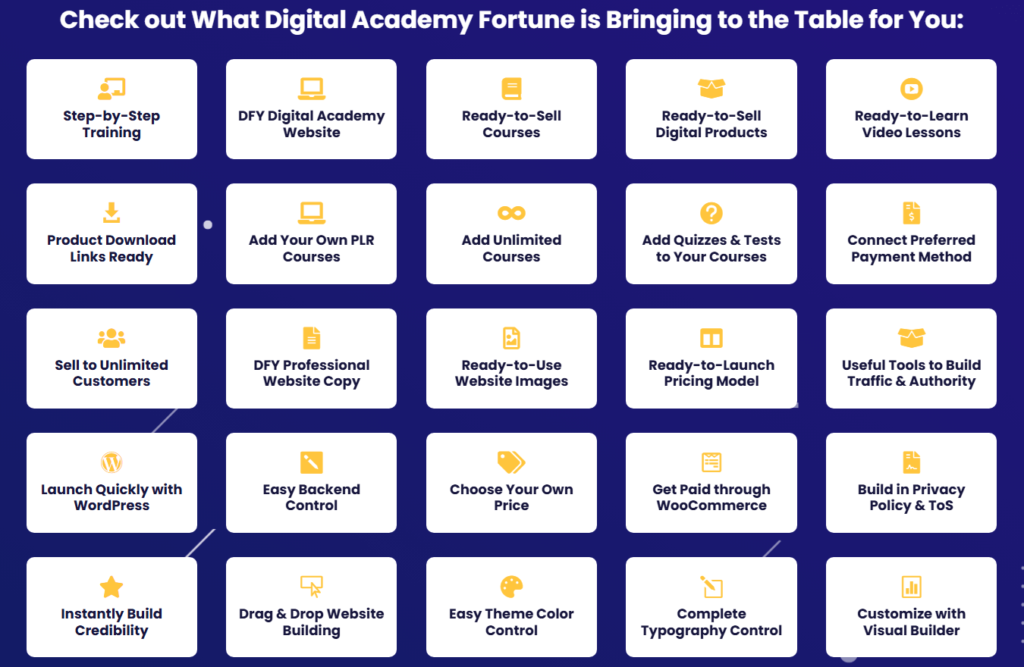
Next, if you have ever tried piecing together an LMS plugin, a theme, a membership system, and WooCommerce, you know the friction often comes from integration details. Therefore, when a package like Digital Academy Fortune claims everything is already aligned, the practical question becomes: “How much does it reduce decisions?” In a typical DFY setup, the early wins come from not needing to choose layouts, not needing to write core page copy, and not needing to invent a site structure. As a result, you can spend your limited time on higher-leverage work like choosing your niche positioning, refining your offers, and building traffic sources.
However, even with a DFY package, the installation phase still matters. For example, WordPress backup imports can be smooth when your hosting environment is compatible, but they can also require small troubleshooting if server limits are low or if your host uses strict security rules. Consequently, one of the first things I would watch for in Digital Academy Fortune is whether the training clearly explains recommended hosting settings, import steps, and common fixes. If the training is detailed, installation becomes a predictable checklist rather than guesswork, and that alone makes the product more valuable for beginners.
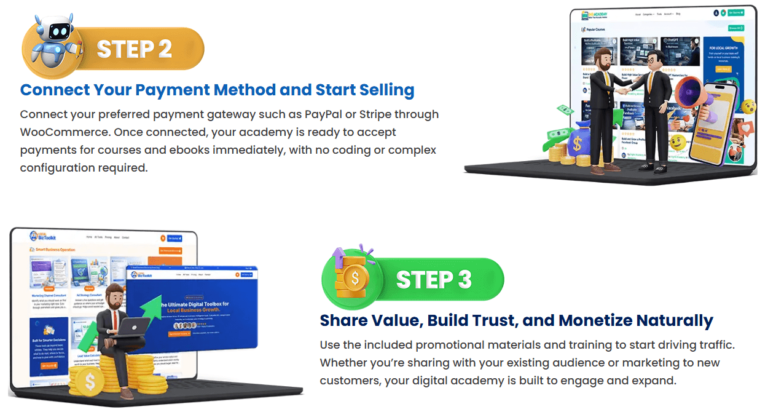
After the base site is installed, the next “real world” moment is monetization setup. In other words, it’s not enough to have a pretty academy if checkout is confusing or access delivery breaks. Since Digital Academy Fortune relies on WooCommerce, that can be a plus because WooCommerce is widely used and flexible. Moreover, payment gateways like PayPal and Stripe are familiar to many buyers, which can reduce checkout friction. On the other hand, you still need to configure basic store settings such as currency, taxes (if relevant), and email notifications. Therefore, the most helpful DFY systems are the ones that provide clear documentation for these settings so you do not end up with a technically “working” store that feels unfinished.
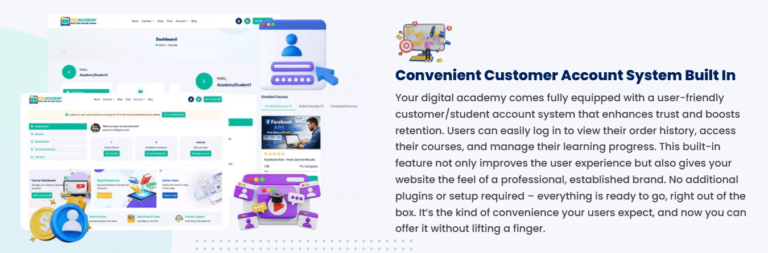
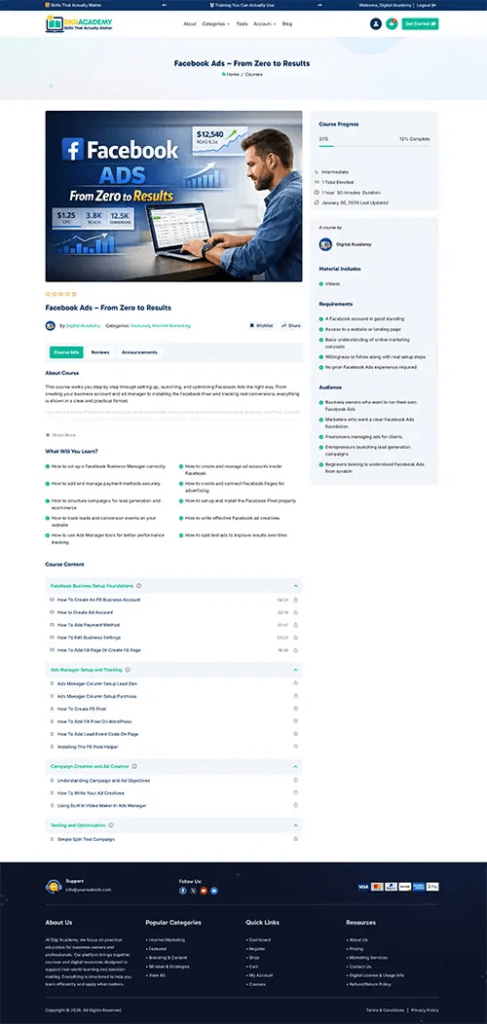
What stands out conceptually in this Digital Academy Fortune Review is the inclusion of a built-in customer/student account system. In practice, this kind of feature can noticeably improve perceived trust, because users expect to log in, view purchases, and access content without emailing support. Consequently, if the account dashboard and content access flow are clean, your academy can feel more like a real education brand rather than a one-off digital download shop.
Additionally, the included pre-written website copy is more important than it seems. Many people underestimate how long it takes to write a coherent About page, sales-oriented homepage copy, and course section introductions that match the site’s layout. Therefore, having copy already placed across core pages can help you launch faster, even if you later rewrite it to match your voice. In other words, it gives you a working baseline instead of forcing you to publish placeholder text that looks unprofessional.
At the same time, the included DFY blog with preloaded articles can be useful if you treat it as a starting structure rather than a finished SEO strategy. While preloaded content can make a site look active, SEO success typically requires niche relevance, keyword alignment, and consistent publishing that matches what your audience is searching for. Consequently, the smarter approach is to use the blog as a framework: keep what fits your niche, improve and personalize articles, and then publish new content that targets specific search intent. This is where Digital Academy Fortune can help with momentum, because your site is not empty from day one, but you still need to refine the content so it supports your market.
Moreover, the “tools page” concept is a practical authority-building tactic when implemented well. If visitors can use simple online tools—like QR code generation or formatting utilities—they may bookmark your site and return, which supports repeat traffic. Therefore, these tools can act like a “value layer” that improves the brand experience beyond just selling courses and ebooks. In my view, this is one of the more strategic parts of Digital Academy Fortune, because it encourages relationship-building before asking for a purchase.
Still, it is important to discuss what you will likely need to do after installation. For example, branding adjustments such as logo insertion, color tuning, typography choices, and homepage hero messaging are often necessary if you want the academy to feel truly yours. Consequently, the DFY platform may save you time, but it does not eliminate the need for positioning. Similarly, if the included courses and ebooks are generic or not perfectly aligned with your niche, you will want to replace or supplement them with niche-specific assets. Therefore, the real advantage is not that you never customize anything, but that you customize from a strong foundation rather than from scratch.
Finally, your results will depend heavily on promotion. Even a polished academy does not automatically attract customers. That is why the included training and marketing materials matter, because they can shorten the time between “site is installed” and “site is being promoted.” In summary, Digital Academy Fortune appears most useful when you treat it as a structured launchpad: install quickly, connect payments, customize branding and offers, then focus on traffic and conversion rather than endless setup.